
Timeline of Systematic Data and the Development of Computable Knowledge


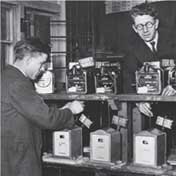
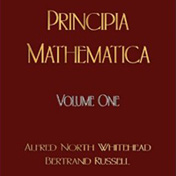 1910: Principia Mathematica
Whitehead and Russell attempt to present mathematics formalized in terms of logic.
1910: Principia Mathematica
Whitehead and Russell attempt to present mathematics formalized in terms of logic.
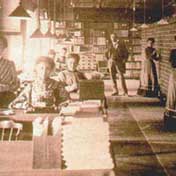 1910: Mundaneum
Collecting the world's knowledge on index cards
Paul Otlet and Henri La Fontaine collected twelve million index cards of information, planning to create a world center for answering factual questions.
1910: Mundaneum
Collecting the world's knowledge on index cards
Paul Otlet and Henri La Fontaine collected twelve million index cards of information, planning to create a world center for answering factual questions.
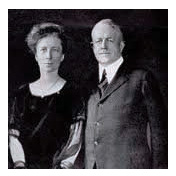
 1936: Alan Turing
The concept of universal computation
Turing shows that any reasonable computation can be done by programming a fixed universal machine—and then speculated that such a machine could emulate the brain.
1936: Alan Turing
The concept of universal computation
Turing shows that any reasonable computation can be done by programming a fixed universal machine—and then speculated that such a machine could emulate the brain.
 1936: Social Security Administration
Numbering every American
Under FDR's New Deal Social Security program, the first Social Security numbers are issued.
1936: Social Security Administration
Numbering every American
Under FDR's New Deal Social Security program, the first Social Security numbers are issued.
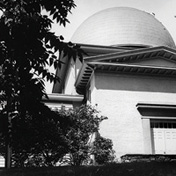 1947: Minor Planet Center
Recording the asteroids
The Minor Planet Center is founded to collect all reports of new asteroids and comets.
1947: Minor Planet Center
Recording the asteroids
The Minor Planet Center is founded to collect all reports of new asteroids and comets.
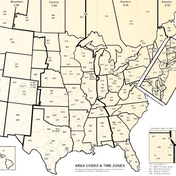 1947: North American Numbering Plan
Uniform telephone numbering plan is developed
AT&T develops a telephone numbering scheme that encompasses 20 North American countries to facilitate direct dialing with ten-digit numbers, with a three-digit area code followed by a seven-digit local number.
1947: North American Numbering Plan
Uniform telephone numbering plan is developed
AT&T develops a telephone numbering scheme that encompasses 20 North American countries to facilitate direct dialing with ten-digit numbers, with a three-digit area code followed by a seven-digit local number.
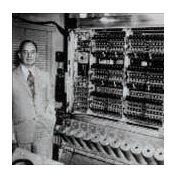 1950: Jules Charney and John von Neumann
Computing the weather
The first serious weather simulation is run on the ENIAC computer.
1950: Jules Charney and John von Neumann
Computing the weather
The first serious weather simulation is run on the ENIAC computer.
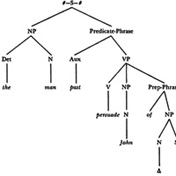 1950s: Computational Linguistics
Algorithms for human language
Computational linguistics puts the concepts of grammar into an algorithmic form that promises to automate processes of language understanding.
1950s: Computational Linguistics
Algorithms for human language
Computational linguistics puts the concepts of grammar into an algorithmic form that promises to automate processes of language understanding.
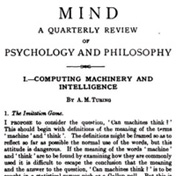 1950—1960s: Artificial Intelligence
Making computers intelligent
Artificial Intelligence defines a research program for developing computers that show general intelligence which leads to many spinoffs important for specific purposes.
1950—1960s: Artificial Intelligence
Making computers intelligent
Artificial Intelligence defines a research program for developing computers that show general intelligence which leads to many spinoffs important for specific purposes.
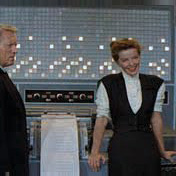 1950—1960s: Pop-Culture Computers
Imagining intelligent machines
From the Tracy and Hepburn movie Desk Set to TV's Batman and Star Trek to HAL in 2001: A Space Odyssey and the robots of Isaac Asimov, the public becomes used to the idea that computers will eventually have human-like knowledge and reasoning.
1950—1960s: Pop-Culture Computers
Imagining intelligent machines
From the Tracy and Hepburn movie Desk Set to TV's Batman and Star Trek to HAL in 2001: A Space Odyssey and the robots of Isaac Asimov, the public becomes used to the idea that computers will eventually have human-like knowledge and reasoning.
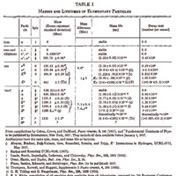 1957: Organizing the elementary particles
Arthur Rosenfeld assembles a table of all known elementary particles.
1957: Organizing the elementary particles
Arthur Rosenfeld assembles a table of all known elementary particles.
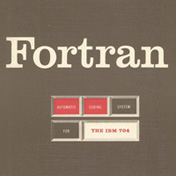 1957: Computer Languages
Languages for programming tasks
Fortran, COBOL, ALGOL and other early computer languages define the concept of a precise formal representation for tasks to be performed by computers.
1957: Computer Languages
Languages for programming tasks
Fortran, COBOL, ALGOL and other early computer languages define the concept of a precise formal representation for tasks to be performed by computers.
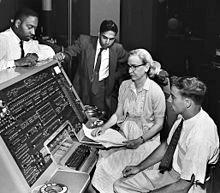 1959: Grace Hopper
First compiler-related tools
Grace Hopper invents one of the first compiler-related tools and popularizes the idea of machine-independent languages, which leads to the development of COBOL.
1959: Grace Hopper
First compiler-related tools
Grace Hopper invents one of the first compiler-related tools and popularizes the idea of machine-independent languages, which leads to the development of COBOL.
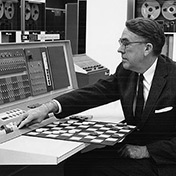 1959: Machine Learning
The term "machine learning" is coined
Computer scientist Arthur Samuel coins the term "machine learning" to describe construction of algorithms that can learn from and make predictions on data.
1959: Machine Learning
The term "machine learning" is coined
Computer scientist Arthur Samuel coins the term "machine learning" to describe construction of algorithms that can learn from and make predictions on data.
1900

1900: National Physical Laboratory; National Bureau of Standards
Using physics to create standards
NPL in the UK and NBS in the US are founded to make measurements and standards using methods from physics.

1906: FDA
Controlling foods & drugs
The Pure Food and Drug Act effectively founds the US Food & Drug Administration.
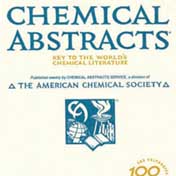
1907: Chemical Abstracts
Volunteers contribute abstracts to the first issue of Chemical Abstracts published in the US; this system is in place through the 1960s.
1910
1910: Principia Mathematica
Whitehead and Russell attempt to present mathematics formalized in terms of logic.

1910: Mundaneum
Collecting the world's knowledge on index cards
Paul Otlet and Henri La Fontaine collected twelve million index cards of information, planning to create a world center for answering factual questions.
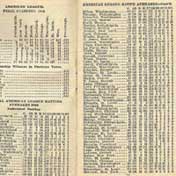
1913: Al Elias
Bringing statistics to sports
The Al Munro Elias Bureau starts producing scorecards and statistics on baseball.
1913: Chemical Rubber Company
CRC publishes the first edition of the Handbook of Chemistry and Physics.
1920

1921: Frank and Lillian Gilbreth
Frank and Lillian ("Cheaper by the Dozen") Gilbreth introduce flow charts as a way to represent processes.
1930
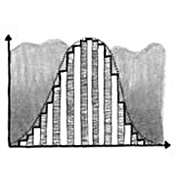
1930s: Modern statistics
Putting mathematics into statistics
Ronald Fisher and others lay the foundations for modern statistics.

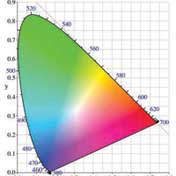
1931: CIE Color Space
Standardizing color
The International Commission on Illumination (CIE) introduces XYZ perceptual color space.
1932: Retail index
Measuring markets for products
The AC Nielsen Company creates a "retail index" for tracking the flow of food and drug purchases.
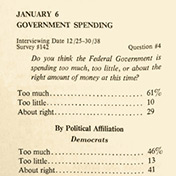
1935: American Institute of Public Opinion
Measuring public opinion
George Gallup founds the American Institute of Public Opinion and begins collecting opinion polls.

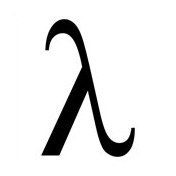
1935: Lambda Calculus
Alonzo Church introduces lambda calculus as an algebra-style notation for computations.
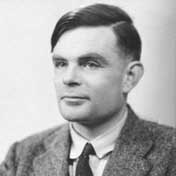
1936: Alan Turing
The concept of universal computation
Turing shows that any reasonable computation can be done by programming a fixed universal machine—and then speculated that such a machine could emulate the brain.

1936: Social Security Administration
Numbering every American
Under FDR's New Deal Social Security program, the first Social Security numbers are issued.


1938: Mathematical Tables Project
Computing higher-level mathematical functions
Gertrude Blanch is the mathematical leader in a WPA project to tabulate higher mathematical functions published by Columbia University Press.

1939: US Geological Survey
Photographically recording a country
The USGS begins collecting aerial photos of the US.
1940

1940s: Digital Computers
Automating the process of computation
The arrival of digital electronic computers provides the mechanism by which computations of all kinds can be automated with increasing efficiency.
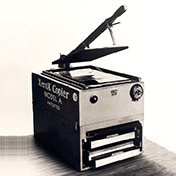
1942: Xerox "Model A" photocopier
Chester Carlson patents the photocopier, and in 1949 the "Xerox Model A" photocopier begins production.

1944: IBM Automatic Sequence Controlled Calculator (ASCC)
The Harvard Mark I begins computations
The ASCC general-purpose electromechanical computer, used in the war effort during World War II, is shipped to Harvard in February 1944.
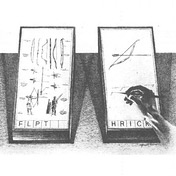
1945: Memex device
The concept of a computerized encyclopedia
Vannevar Bush speculates on the idea of a "memex" device that will provide computerized access to the world's knowledge.

1946: IUPAC Notation
A standard name for every chemical
Malcolm Dyson invents the IUPAC system for naming chemicals.
1947: Minor Planet Center
Recording the asteroids
The Minor Planet Center is founded to collect all reports of new asteroids and comets.
1947: North American Numbering Plan
Uniform telephone numbering plan is developed
AT&T develops a telephone numbering scheme that encompasses 20 North American countries to facilitate direct dialing with ten-digit numbers, with a three-digit area code followed by a seven-digit local number.
1950
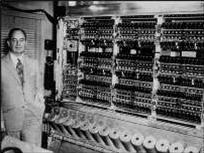
1950: Jules Charney and John von Neumann
Computing the weather
The first serious weather simulation is run on the ENIAC computer.
1950s: Computational Linguistics
Algorithms for human language
Computational linguistics puts the concepts of grammar into an algorithmic form that promises to automate processes of language understanding.

1950—1960s: Artificial Intelligence
Making computers intelligent
Artificial Intelligence defines a research program for developing computers that show general intelligence which leads to many spinoffs important for specific purposes.
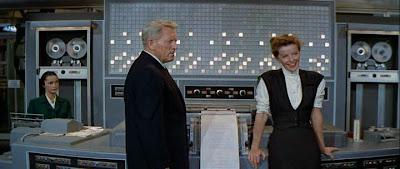
1950—1960s: Pop-Culture Computers
Imagining intelligent machines
From the Tracy and Hepburn movie Desk Set to TV's Batman and Star Trek to HAL in 2001: A Space Odyssey and the robots of Isaac Asimov, the public becomes used to the idea that computers will eventually have human-like knowledge and reasoning.
1951: Ethnologue: Languages of the World
Statistics on living languages and dialects of the world
The first edition of Ethnologue is published, cataloging statistics and data about living languages of the world.

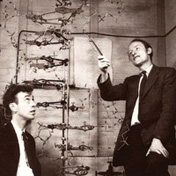
1953: DNA Structure
Digital data for all life
James Watson and Francis Crick discover that DNA contains a digital genetic code.

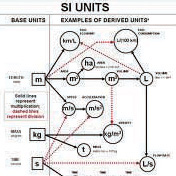
1954: SI Units
Standard units of measure for everything
The SI (metre, kilogram, second, ampere, kelvin, candela) system of units is defined.
1957: Organizing the elementary particles
Arthur Rosenfeld assembles a table of all known elementary particles.

1957: Computer Languages
Languages for programming tasks
Fortran, COBOL, ALGOL and other early computer languages define the concept of a precise formal representation for tasks to be performed by computers.
.jpg)
1959: Grace Hopper
First compiler-related tools
Grace Hopper invents one of the first compiler-related tools and popularizes the idea of machine-independent languages, which leads to the development of COBOL.
1959: Machine Learning
The term "machine learning" is coined
Computer scientist Arthur Samuel coins the term "machine learning" to describe construction of algorithms that can learn from and make predictions on data.
We're continuing to update this timeline... Do you know some history we don't?
 We want your input »